
Latest Articles
Tips & Insights
The latest from BYD NOVA — EV technology and tips for drivers.
 Tips & Insights
14 September 2026
Who Is the BYD Dolphin For? Highlights, Price & What to Know Before You Buy
Is the BYD Dolphin the right EV for you? Learn who it suits, its key highlights, how charging works, and what to check before you buy.
View All Articles Tips & Insights
8 September 2026
EV vs PHEV (DM-i): What's the Difference? Which is Right for Your Lifestyle?
Today, choosing an electric-powered vehicle isn't limited to just "gasoline cars" or "EVs." There's also PHEV (Plug-in Hybrid Electric Vehicle) technology, or BYD's DM-i, which combines electric motor propulsion with a combustion engine. Many people wonder: what's the difference between EV and PHEV? Which one suits you better? And if you're looking at a BYD, which technology should you choose? This article will walk you through the differences between EV and PHEV (DM-i) — from driving style and charging to running costs and travel patterns — to help you choose the vehicle that best fits your lifestyle. What is an EV? An EV (Electric Vehicle), or 100% electric car, runs entirely on battery power to drive its electric motor, with no internal combustion engine. As long as the battery has sufficient charge, the vehicle can run purely on electricity without ever needing gasoline. Advantages of EVs 1. Lower energy costs. Charging an EV can help reduce energy expenses, especially for those who charge at home and use their car mainly for daily driving. Actual costs depend on electricity rates, the vehicle model, and driving behavior. 2. Smooth and quiet drivetrain. Electric motors deliver instant torque, giving the car quick responsiveness along with a smooth, quiet driving feel. 3. Generally less maintenance than engine-powered cars. EVs have no combustion engine or related systems such as engine oil and oil filters, resulting in fewer maintenance items compared to cars with engines. 4. No tailpipe emissions while driving. Since there's no combustion engine, EVs produce no tailpipe emissions during use. Things to consider with EVs 1) Requires charging to refuel with energy 2) For long trips, charging stops should be planned in advance 3) Driving range per charge depends on the model, battery, traffic conditions, speed, and weather 4) Those without a home or workplace charging point may need to rely more on public charging stations What is a PHEV? A PHEV (Plug-in Hybrid Electric Vehicle) is a plug-in hybrid car equipped with an electric motor, battery, and internal combustion engine, and can be charged from an external power source. For BYD, DM-i (Dual Mode Intelligent) technology is a plug-in hybrid system that prioritizes electric-powered driving, with the engine stepping in when appropriate. The key advantage of this system is that drivers can use electric power for daily driving while still having the engine as a backup option for long-distance trips. Advantages of PHEV / DM-i 1. Combines the convenience of an EV with the flexibility of a gasoline-refuelable car. You can charge it for daily travel, and refuel with gasoline when needed — ideal for those with varied travel patterns. 2. Suitable for both city driving and long-distance travel. For daily commuting, you can run on electric power according to the model and system's conditions, while the engine assists on longer journeys. 3. Reduces reliance on gasoline for everyday use. With regular charging, users can rely on electric mode for suitable distances, cutting down fuel consumption compared to engine-only vehicles. 4. Eases long-distance travel concerns. Although the electric battery has limited range, having the engine and gasoline as a backup power source adds flexibility for longer trips. Things to consider with PHEV / DM-i 1) Has both an electric motor and an engine system, meaning more components to maintain compared to an EV 2) To make the most of the plug-in hybrid's fuel-saving benefits, regular charging is recommended 3) Costs and performance vary by model 4) When the engine is running, the car still produces exhaust emissions from fuel combustion EV or PHEV (DM-i): Which One Suits You? Choosing between EV and PHEV isn't about which system is "better" — it depends on your actual usage habits. Who is an EV suitable for? ✓ Mainly drives in the city or for daily commuting ✓ Has a home or location with convenient charging access ✓ Wants to reduce everyday energy costs ✓ Enjoys the quiet, responsive feel of electric driving ✓ Prefers a car without a combustion engine ✓ Is willing to plan charging stops for long trips Who is PHEV / DM-i suitable for? ✓ Drives both in the city and to other provinces ✓ Travels long distances regularly ✓ Wants to use electric power daily but still needs the engine's flexibility ✓ Has regular opportunities to charge the car ✓ Isn't ready to fully switch travel habits from gasoline to a full EV ✓ Wants to cut fuel use while keeping an option for long-distance travel If You Drive 50–100 km a Day, Should You Choose EV or DM-i? If most of your driving is within the city — commuting to work, school runs, or daily errands — and you have a charging point at home or work, an EV could be a great fit, since you can charge and use it daily without ever needing gasoline. For those who drive both in the city and regularly travel to other provinces, DM-i may offer more flexibility, letting you use electric power while still having the engine as a backup. If You Travel Long Distances Often, Should You Choose EV or PHEV? If you travel long distances regularly, it's important to consider whether your route has enough charging stations and whether you're comfortable planning charging stops along the way. EV suits those ready to plan their charging and who want to drive 100% electric. Meanwhile, PHEV / DM-i suits those who want travel flexibility — since besides charging, you can also refuel with gasoline when needed. Comparison Table: EV vs PHEV (DM-i) Topic EV PHEV / DM-i Drivetrain Electric motor Electric motor + engine Energy Electricity Electricity + gasoline Charging Required Can be charged Refueling Not needed Can refuel Electric driving Fully electric Can drive electric per system conditions City driving Excellent fit Good fit Long-distance travel Requires charging-stop planning More flexible Maintenance Generally fewer items Has both electric and engine systems Tailpipe emissions None Present when engine is running Note: Details on range, driving modes, consumption rates, and charging times vary by model and usage conditions. Check the specifications of each model before deciding. EV or PHEV (DM-i): Which One Suits You? Choosing between EV and PHEV isn't about which system is "better" — it depends on your actual usage habits. Who is an EV suitable for? An EV suits those who ✓ Mainly drive in the city or for daily commuting ✓ Have a home or location with convenient charging access ✓ Want to reduce everyday energy costs ✓ Enjoy the quiet, responsive feel of electric driving ✓ Prefer a car without a combustion engine ✓ Can plan charging stops when traveling long distances Who is PHEV / DM-i suitable for? The PHEV / DM-i system suits those who ✓ Drive both in the city and to other provinces ✓ Travel long distances regularly ✓ Want to use electric power daily but still need the engine's flexibility ✓ Have regular opportunities to charge the car ✓ Aren't ready to fully switch travel habits from gasoline to a full EV ✓ Want to cut fuel use while keeping an option for long-distance travel If You Drive 50–100 km a Day, Should You Choose EV or DM-i? If most of your driving is within the city — commuting to work, school runs, or daily errands — and you have a charging point at home or work, an EV could be a great fit, since you can charge and use it daily without ever needing gasoline. For those who drive both in the city and regularly travel to other provinces, DM-i may offer more flexibility, since you can use electric power while still having the engine as a backup. If You Travel Long Distances Often, Should You Choose EV or PHEV? If you travel long distances regularly, it's important to consider whether your route has enough charging stations and whether you're comfortable planning charging stops along the way. EV suits those ready to plan their charging and who want to drive 100% electric. Meanwhile, PHEV / DM-i suits those who want travel flexibility — since besides charging, you can also refuel with gasoline when needed. Which Is More Economical: EV or DM-i? There's no single answer as to which system is more economical in every case, since actual costs depend on several factors, such as: Electricity rates Fuel prices Daily driving distance Driving behavior Travel speed Charging at home or at public stations Vehicle model and size For EV owners who can charge regularly at home, energy costs can be quite attractive compared to refueling with gasoline. As for PHEV / DM-i, charging regularly and using electric power for suitable distances can also help reduce everyday fuel consumption. Summary: EV vs PHEV (DM-i) — Which Should You Choose? Choose an EV if... You want a 100% electric car mainly for everyday use, have convenient access to charging, and are willing to plan charging stops for long trips. Choose PHEV / DM-i if... You want to use electric power daily, but still travel long distances often and want the flexibility of having an engine and gasoline as a backup option. So there's no single answer as to whether EV or DM-i is best for everyone — rather, there's a vehicle that best suits each person's usage pattern. If you're still undecided, feel free to consult the BYD NOVA team and test drive BYD vehicles available in both EV and DM-i technology to compare the real experience before deciding. BYD NOVA – Better Drive Better Life Choose the technology that suits you, and make every journey fit your life even better. Frequently Asked Questions (FAQ) What's the difference between EV and PHEV? An EV runs on 100% electric power from its battery and has no combustion engine. A PHEV has an electric motor, battery, and engine, and can be charged from an external source as well as refueled with gasoline. What is BYD DM-i? DM-i is BYD's plug-in hybrid technology that combines the electric motor, battery, and engine, prioritizing electric-powered driving according to the system's conditions. Does DM-i need to be charged? A PHEV / DM-i can be charged from an external source, and charging it regularly lets you make more use of its electric drive system. Details vary by model. Does an EV need gasoline? No. An EV runs on electric power from its battery and has no combustion engine. Is an EV suitable for long-distance travel? Yes, it can be, as long as your route has enough charging stations and you're able to plan charging stops along the way. Who is a PHEV suitable for? It suits those who want to use electric power for daily travel but still need to travel long distances and want the flexibility of an engine and gasoline. Which is more economical, EV or DM-i? It depends on the model, usage pattern, electricity rates, fuel prices, and driving behavior — so it's best compared based on each person's actual usage.
View All Articles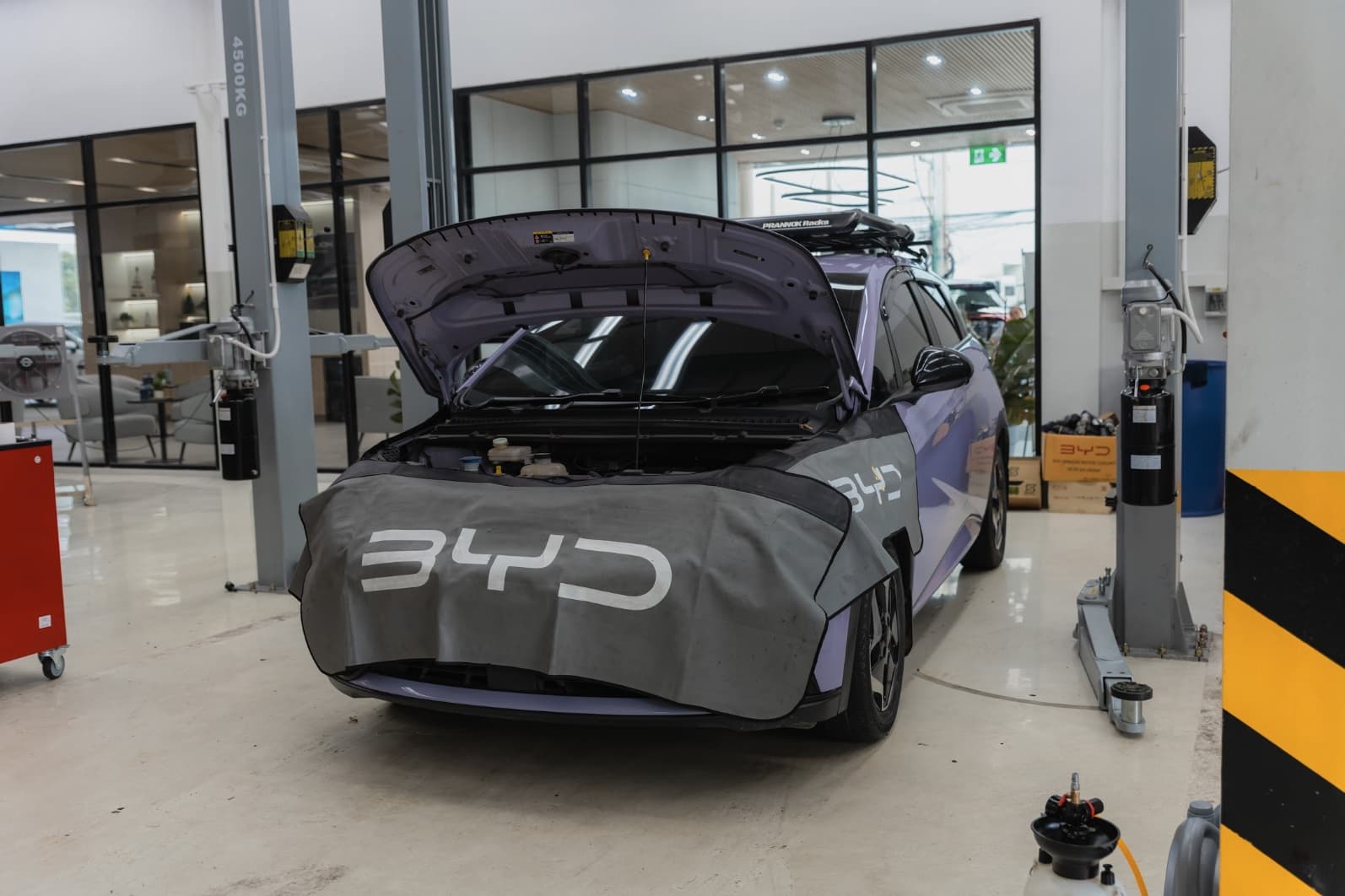 Tips & Insights
2 September 2026
BYD Dolphin 5,000 km Service Check: What Is Inspected?
A practical guide to 10 inspection groups for a BYD Dolphin at 5,000 km or 3 months, including each purpose and the types of tools involved.
View All Articles Tips & Insights
27 July 2026
8 Essential Apps Every BYD Owner Should Have
A roundup of the apps every BYD electric vehicle owner should keep on their phone — from car care and route planning to finding a charging point on the go.
View All Articles Tips & Insights
25 July 2026
EV Tires vs. Regular Tires: What's The Difference
A side-by-side comparison of EV tires and conventional tires, with the strengths of each, so you can choose the right set for your car.
View All Articles Tips & Insights
22 July 2026
How To Unplug The Charger The Right Way
A step-by-step guide to safely disconnecting both wall chargers and portable EV chargers once charging is complete.
View All Articles Tips & Insights
19 July 2026
AC vs. DC Charging: What's The Difference?
Choose the right way to charge — convenient, time-saving, and getting the most value from your EV.
View All Articles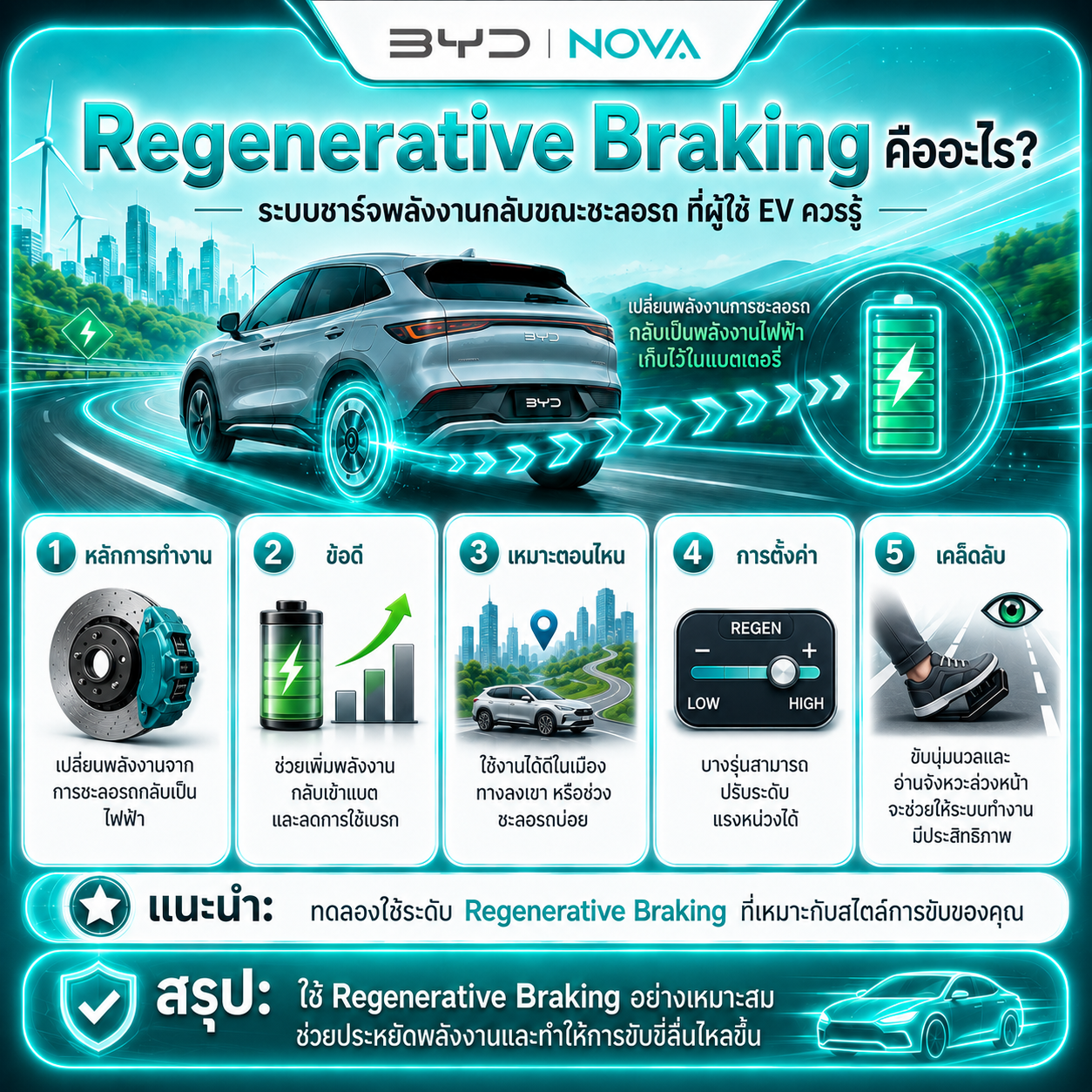 Tips & Insights
17 July 2026
What Is Regenerative Braking?
Regenerative braking — the system that recovers energy as you slow down — is a key technology in every EV.
View All Articles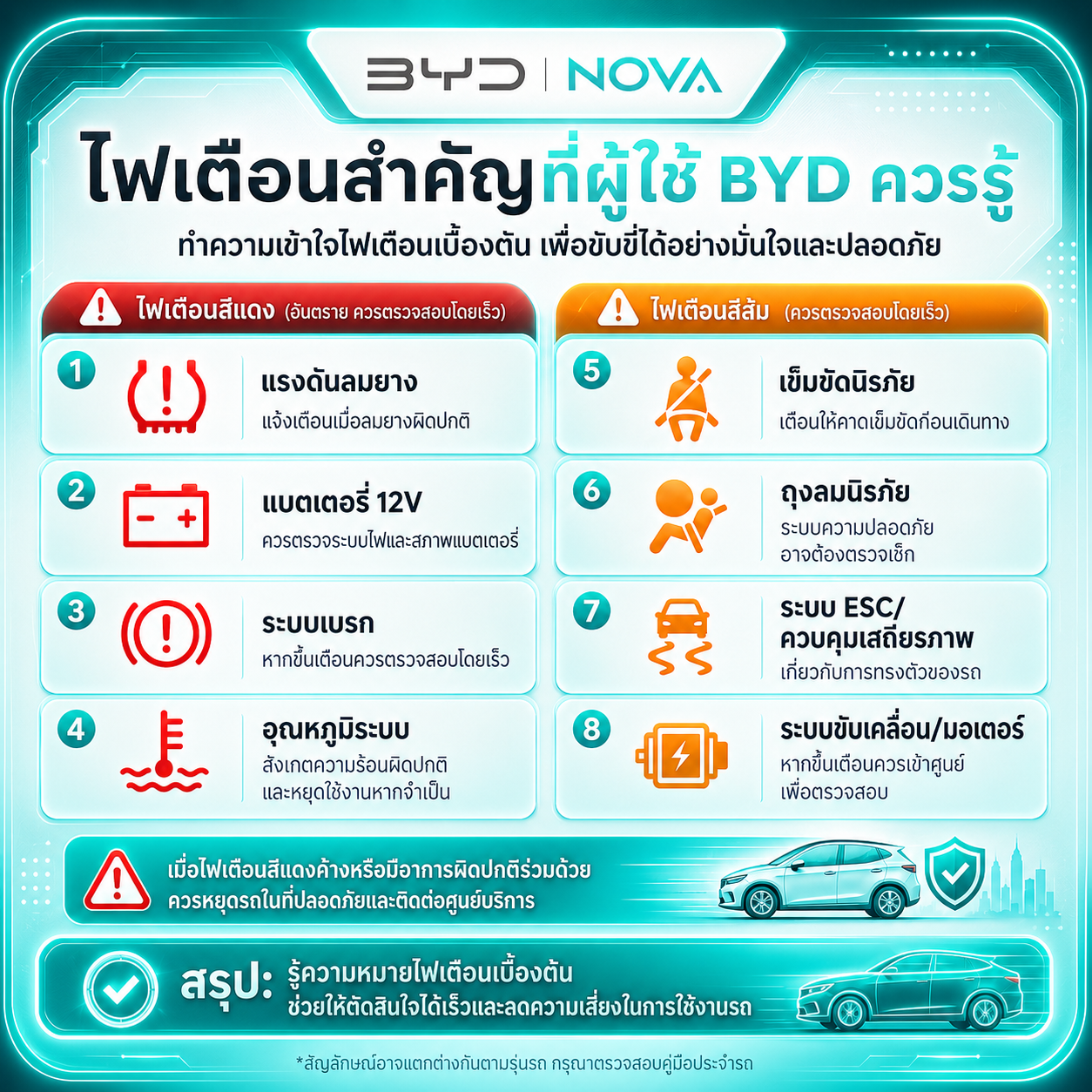 Tips & Insights
15 July 2026
Dashboard Warning Lights You Should Know
A guide to the meaning behind the yellow and red warning icons on your instrument cluster, for extra peace of mind on every drive.
View All Articles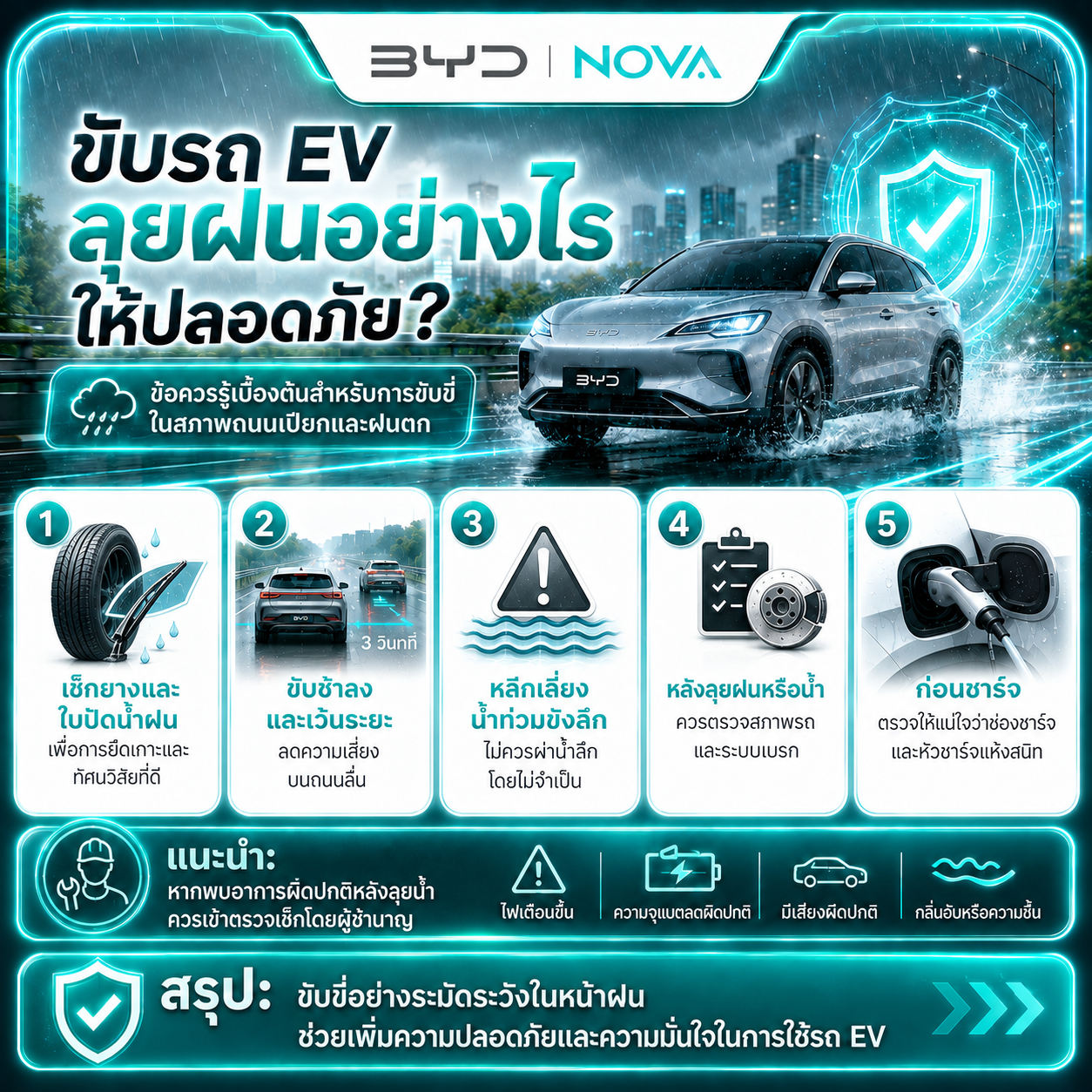 Tips & Insights
15 July 2026
Know Before You Go: Driving An EV Safely Through Rain
During the rainy season, EV drivers may face slippery roads, heavy downpours, or standing water — all of which affect driving safety.
View All Articles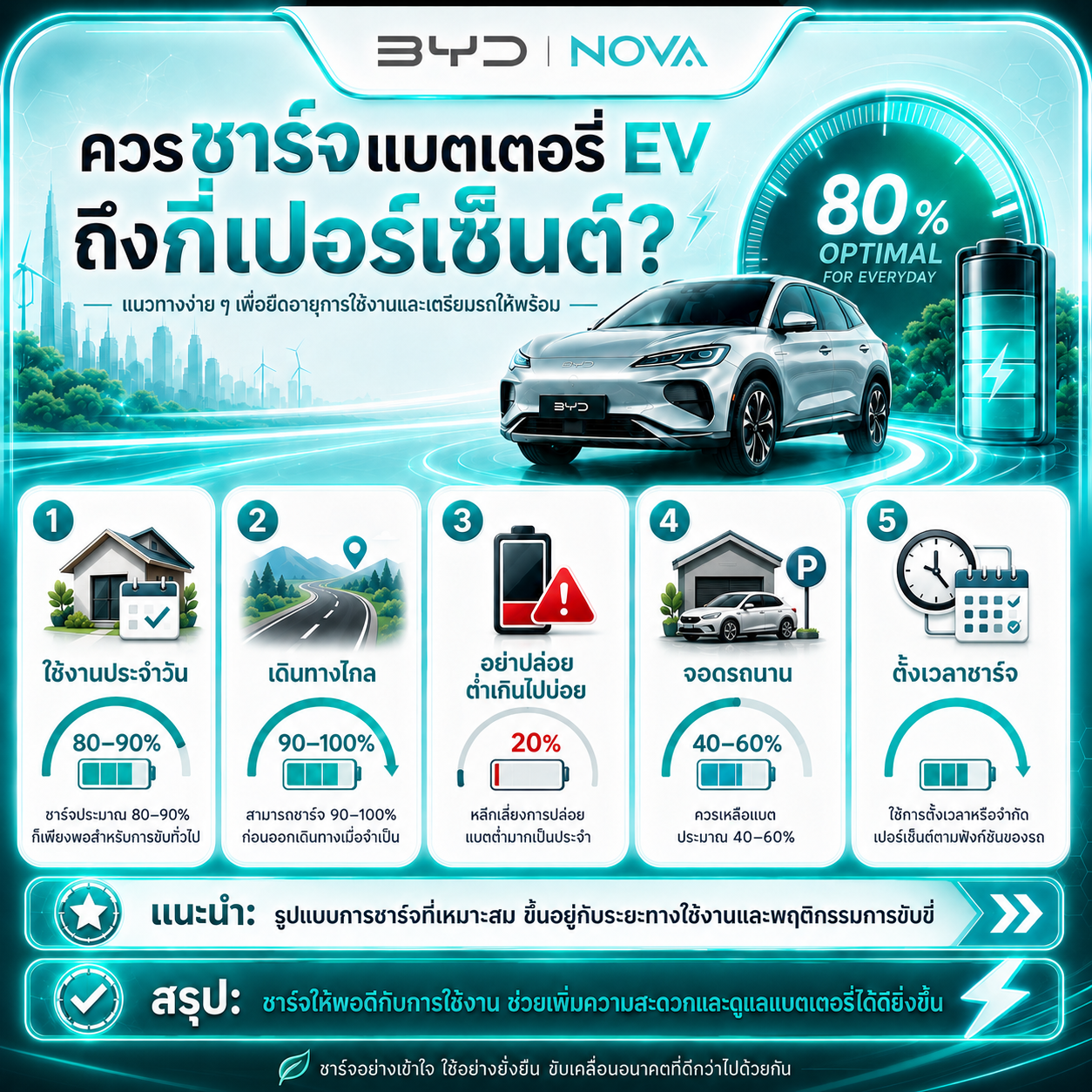 Tips & Insights
14 July 2026
What Percentage Should You Charge Your EV Battery To?
Charging an EV doesn't always need to reach 100% — the right level depends on how you're using the car.
View All Articles Tips & Insights
13 July 2026
How Should You Care For A Parked EV Long-Term?
If you're planning to leave your electric vehicle (EV) parked for several days or weeks
View All Articles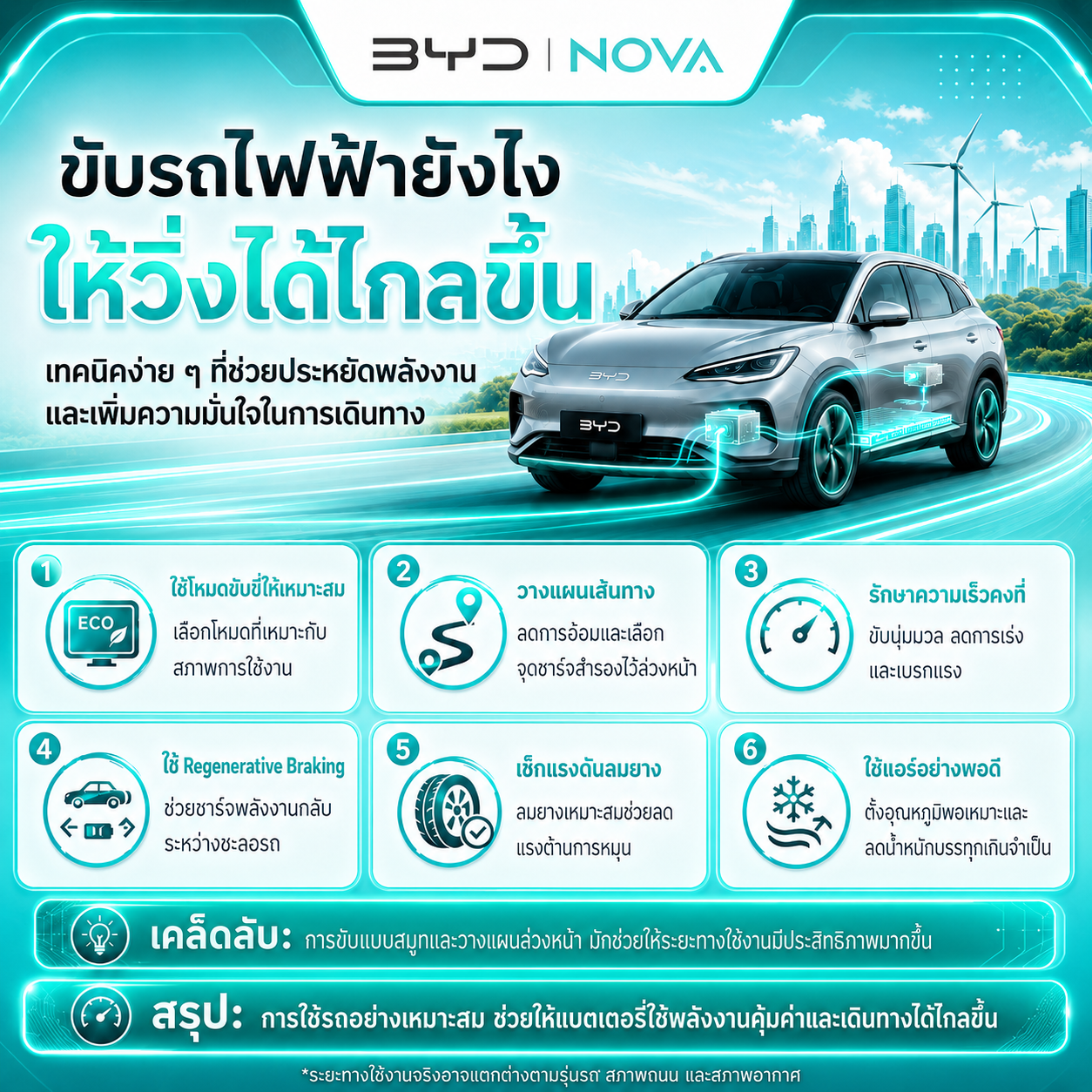 Tips & Insights
12 July 2026
How To Drive An EV Further On A Single Charge
Simple techniques that help save energy and drive with more confidence.
View All Articles Tips & Insights
11 July 2026
What Is An OTA Update?
Software updates delivered over the internet, keeping your car modern and performing better.
View All Articles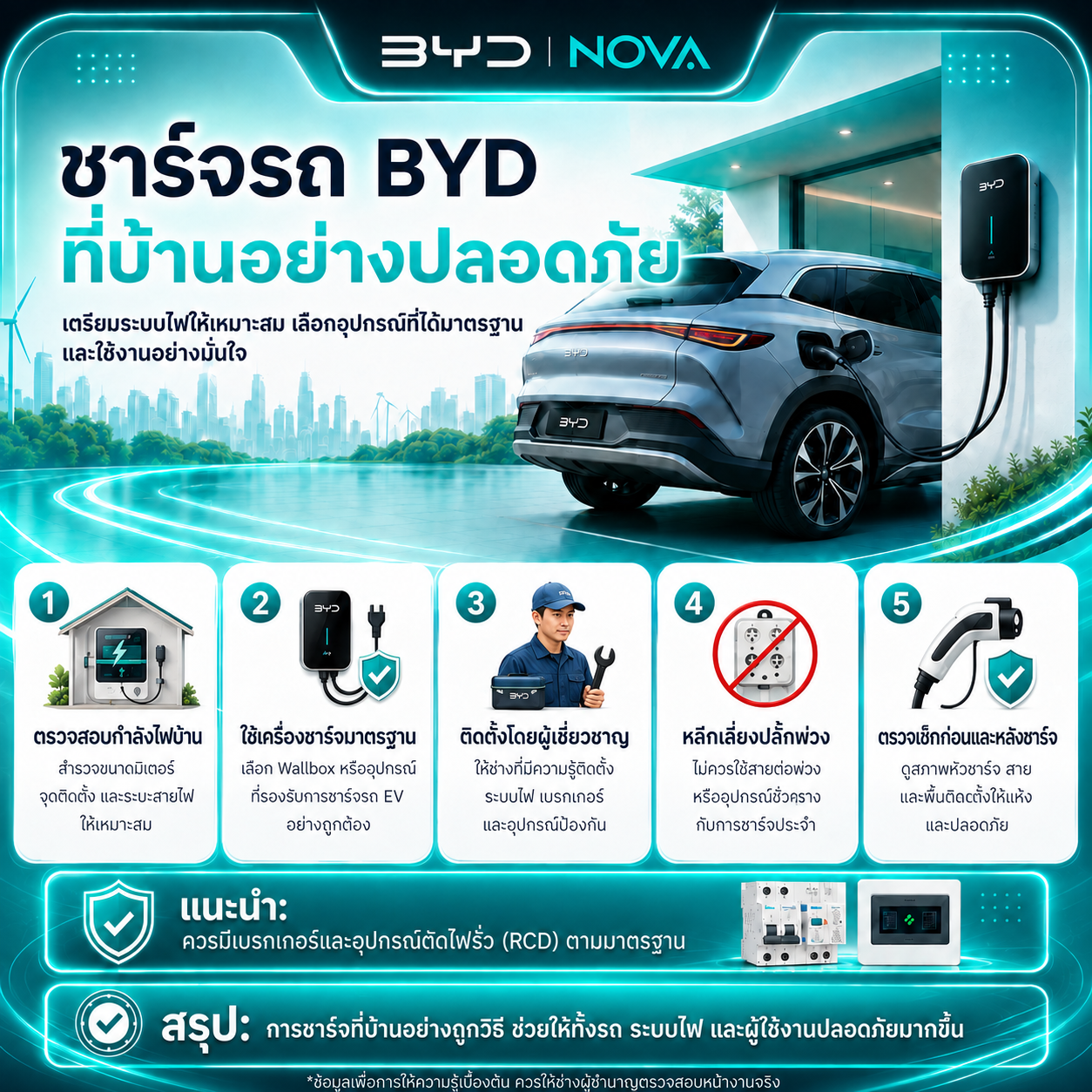 Tips & Insights
10 July 2026
Charging Your BYD At Home Safely
Get your electrical system ready, choose certified equipment, and charge with confidence.
View All Articles Tips & Insights
9 July 2026
Preparing Your BYD For A Long Trip
A simple checklist before setting off, for a more confident journey.
View All Articles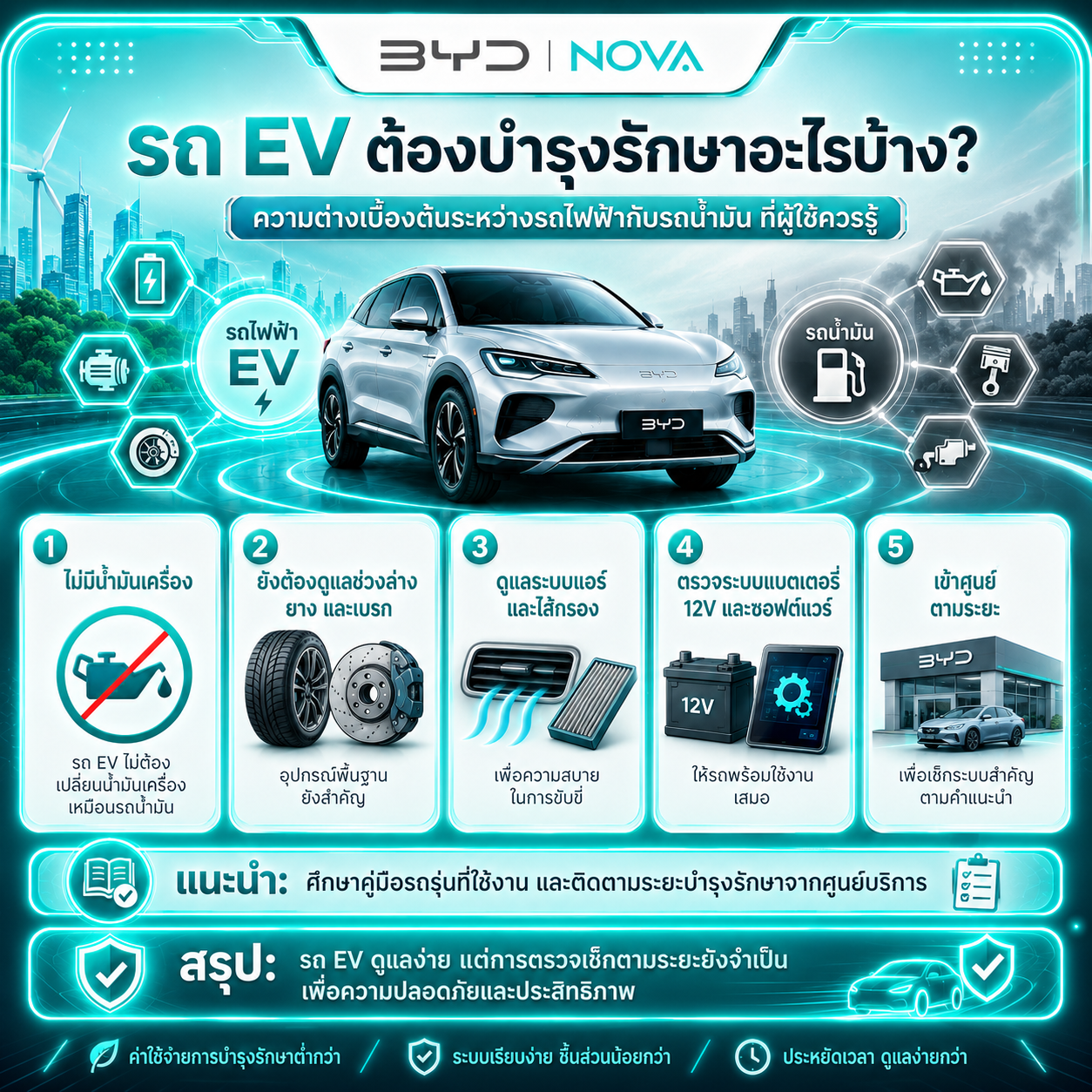 Tips & Insights
8 July 2026
What Maintenance Does An EV Need?
The basic differences between an EV and a petrol car that owners should know.
View All Articles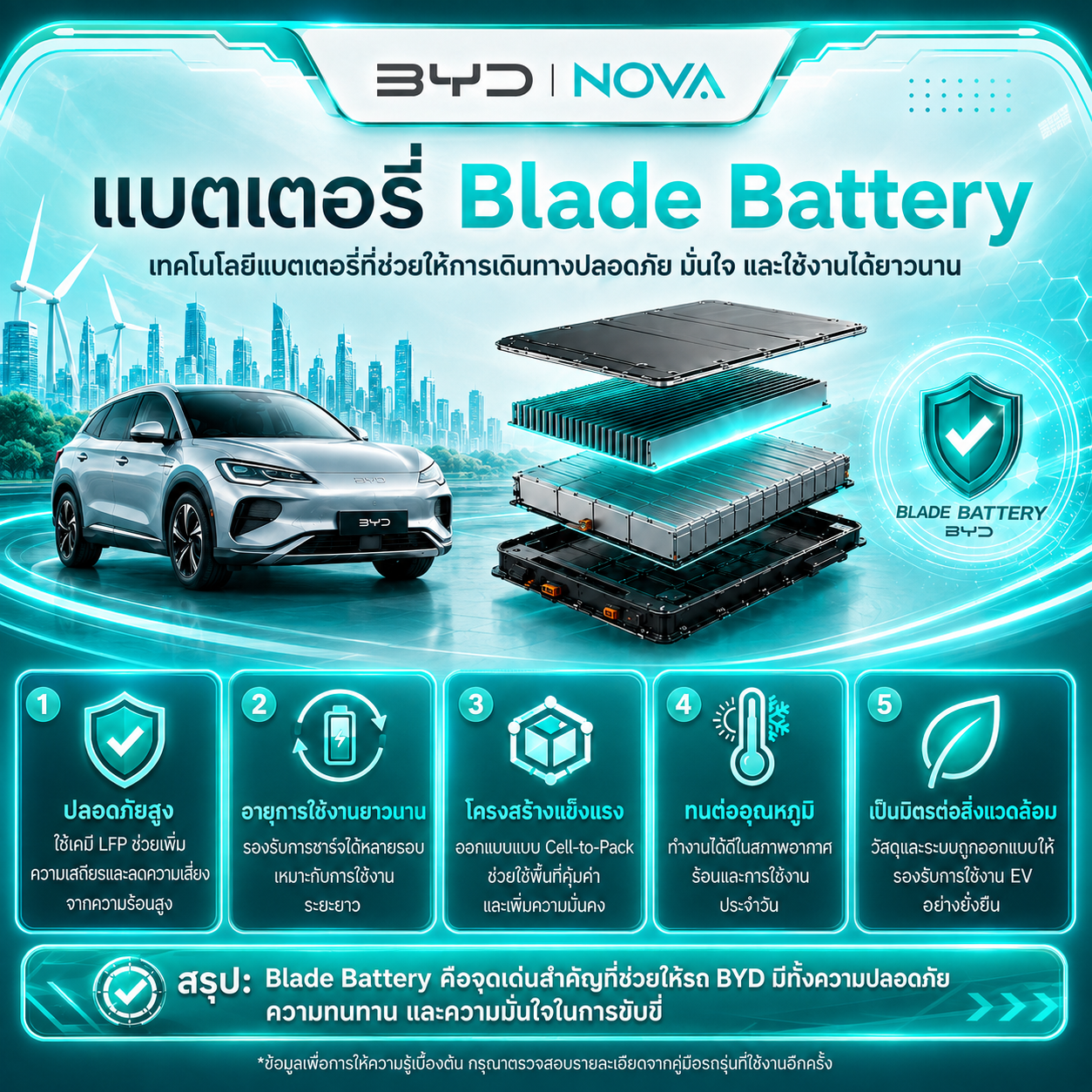 Tips & Insights
7 July 2026
The Blade Battery
The battery technology that helps you travel safely, confidently, and for the long run.
View All Articles Tips & Insights
6 July 2026
Running Low On Battery Mid-Trip: What To Do
Basic steps to handle a low-battery situation, so you can reach a charging point safely.
View All Articles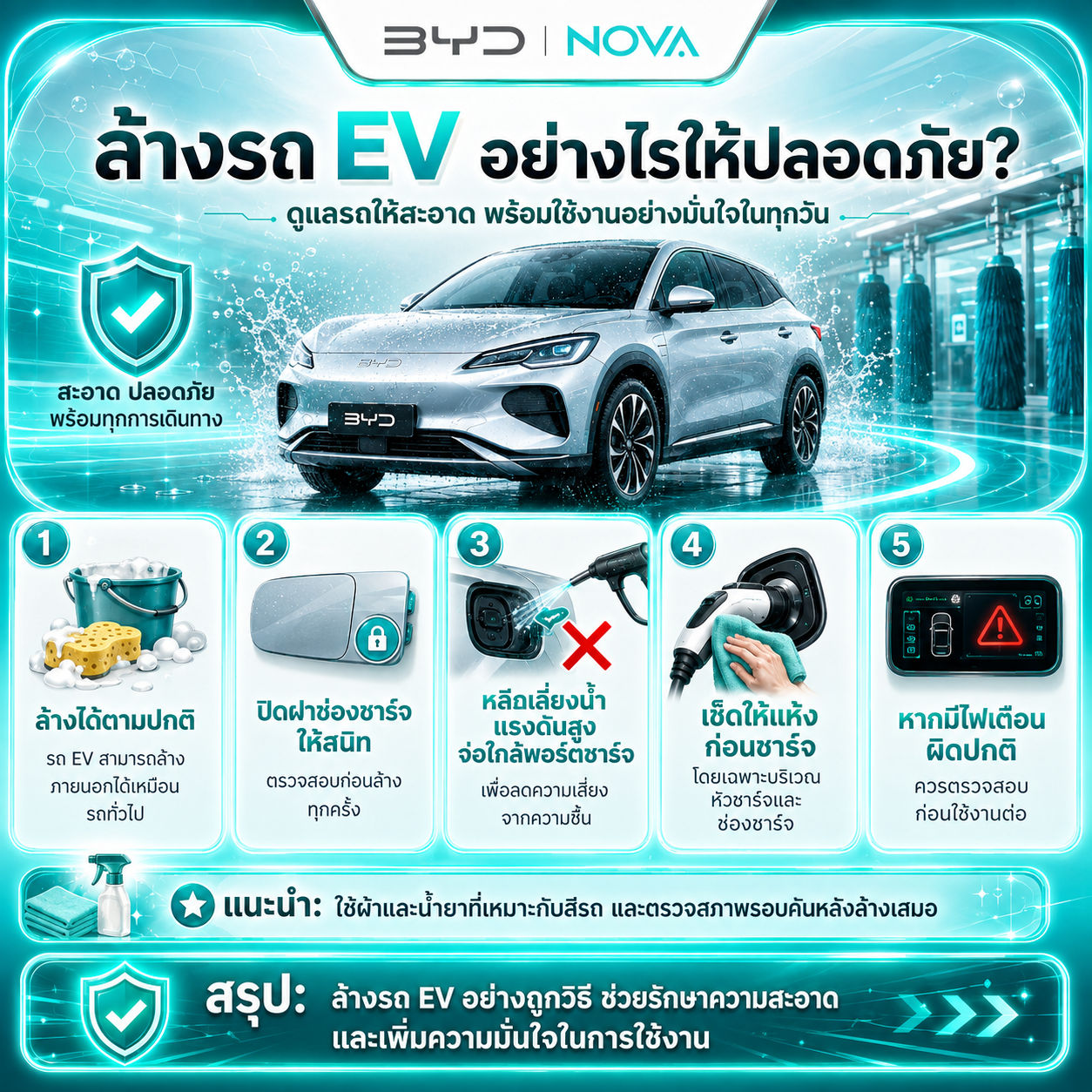 Tips & Insights
5 July 2026
How To Wash Your EV Safely
Keep your car clean and ready to go with confidence every day.
View All Articles Tips & Insights
4 July 2026
How To Plan Charging Stops With Confidence
A simple checklist for an EV trip that's ready for anything.
View All Articles Tips & Insights
3 July 2026
Caring For The 12V Battery In Your BYD
Even in an EV, the 12V battery is still essential to several key systems.
View All ArticlesFound the BYD model for you? Book a test drive today
The BYD NOVA team is ready to advise you and arrange a free test drive at any branch
Book Test Drive