Know Before You Go: Driving An EV Safely Through Rain
15 July 2026
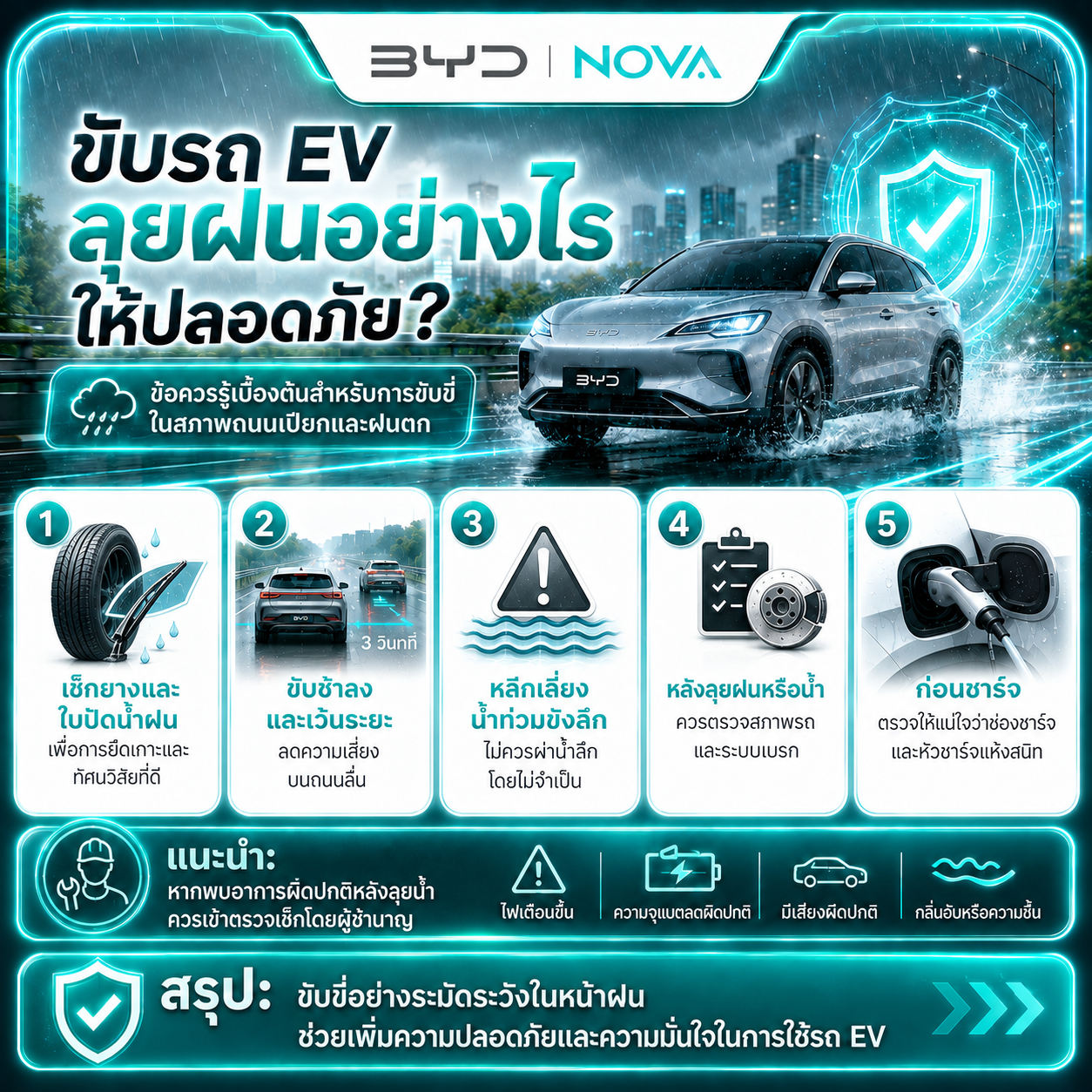
During the rainy season, EV drivers may face slippery roads, heavy downpours, or standing water, all of which affect driving safety. While EVs are engineered with water protection built into their electrical systems and battery to standard, drivers should still take extra care and check the car before setting off.
1. Check your tires and wipers. Tires are essential for road grip, especially on wet surfaces — check tread condition and tire pressure are at the right level, and make sure the wipers work well so you can see clearly throughout the drive.
2. Slow down and increase following distance. Rain makes roads more slippery than usual, lengthening braking distance. Slow down and leave at least a 3-second gap from the car ahead — more in heavy rain — to give yourself enough time to brake or avoid an emergency.
3. Avoid driving through deep standing water. Even though EVs have battery and electrical protection, avoid driving through high water levels unless necessary, since it can affect various systems and increases the risk of losing control. If you're unsure of the depth, take a safer route instead.
4. Check the car and brakes after driving through water. If you have to drive through standing water, test the brakes carefully afterward to confirm they're working normally, and watch for anything unusual. If you notice a sound, smell, or other abnormality, have it inspected by a professional.
5. Make sure the charging port is dry before charging. After driving in rain or through wet areas, check that the charging port and connector are free of water or unusual moisture before plugging in. If they're very wet, let them dry or clean them properly first.
Additionally, if after driving through water you notice a dashboard warning light, abnormal battery behavior, unusual sounds, or smell and moisture where there shouldn't be any, stop using the car and have it checked at a service center by a qualified technician.
In summary, driving an EV in the rain can be done safely — just prepare the car, slow down, keep your distance, avoid deep standing water, and check the car after driving through wet areas, along with confirming the charging port is dry before every charge. A little extra care goes a long way toward a safe, confident drive on rainy days.
Found the BYD model for you? Book a test drive today
The BYD NOVA team is ready to advise you and arrange a free test drive at any branch
Book Test Drive