What Is Regenerative Braking?
17 July 2026
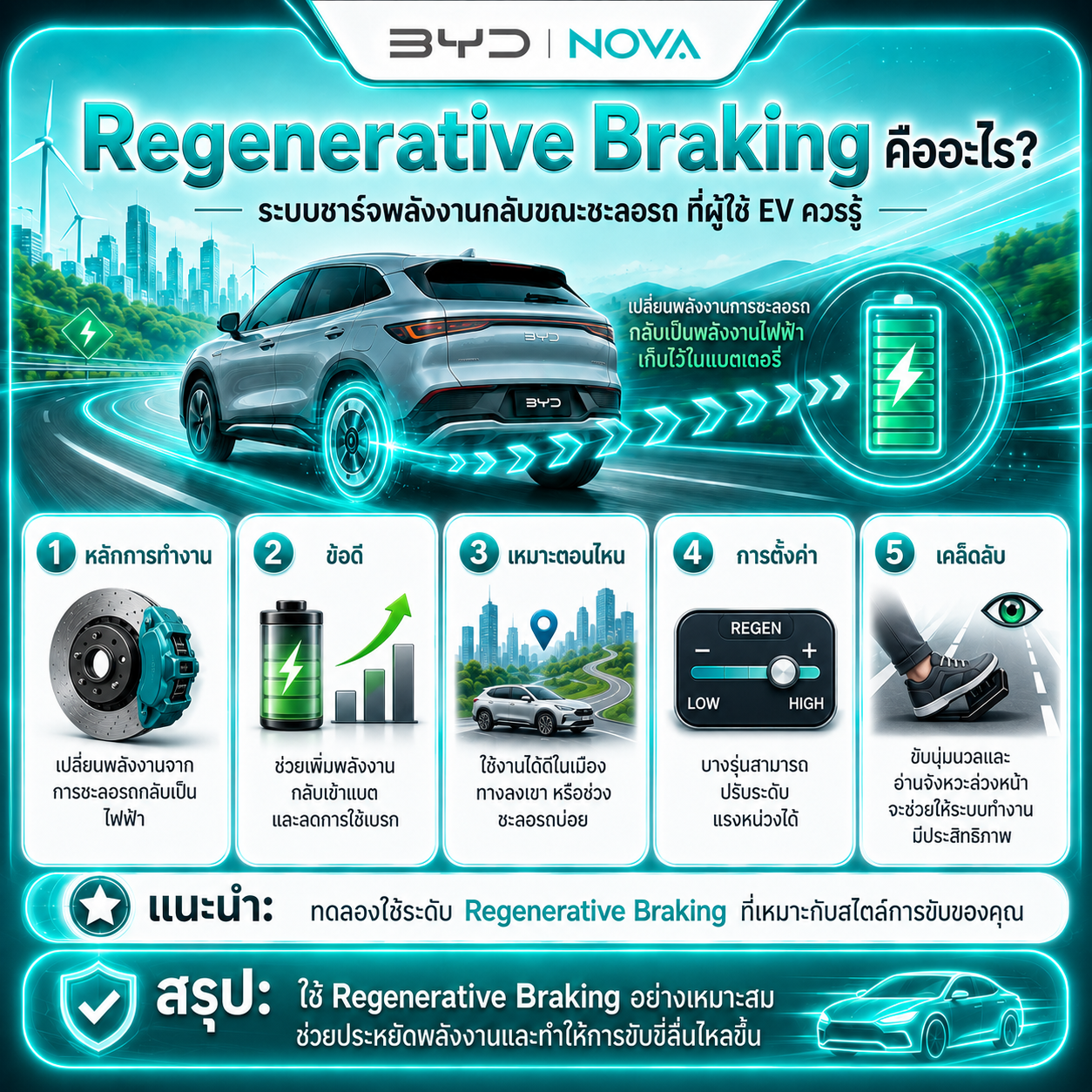
Regenerative braking, or energy-recovery braking while slowing down, is a key technology in electric vehicles. The system takes the energy generated when the car decelerates or you lift off the accelerator and converts it back into electrical energy stored in the battery, instead of losing it as heat the way conventional braking does.
Here's what's worth knowing:
– It converts the energy from slowing down back into electricity to recharge the battery.
– It recovers energy for reuse, reduces reliance on the conventional brakes, and improves the car's overall energy efficiency.
– It's especially useful in city driving, downhill stretches, or anywhere you slow down frequently.
– Some BYD EVs let you adjust the strength of regenerative braking from low to high, to match your driving style.
– Easing off the accelerator gradually and reading traffic ahead helps the system recover energy back into the battery more effectively.
Tip: try out a few different regenerative braking levels to find the one that suits your driving style best, since a stronger setting can slow the car down noticeably faster the moment you lift off the accelerator.
In short, using regenerative braking well helps save energy, eases the load on the conventional brakes, and makes driving an EV more efficient and smoother overall.
Found the BYD model for you? Book a test drive today
The BYD NOVA team is ready to advise you and arrange a free test drive at any branch
Book Test Drive